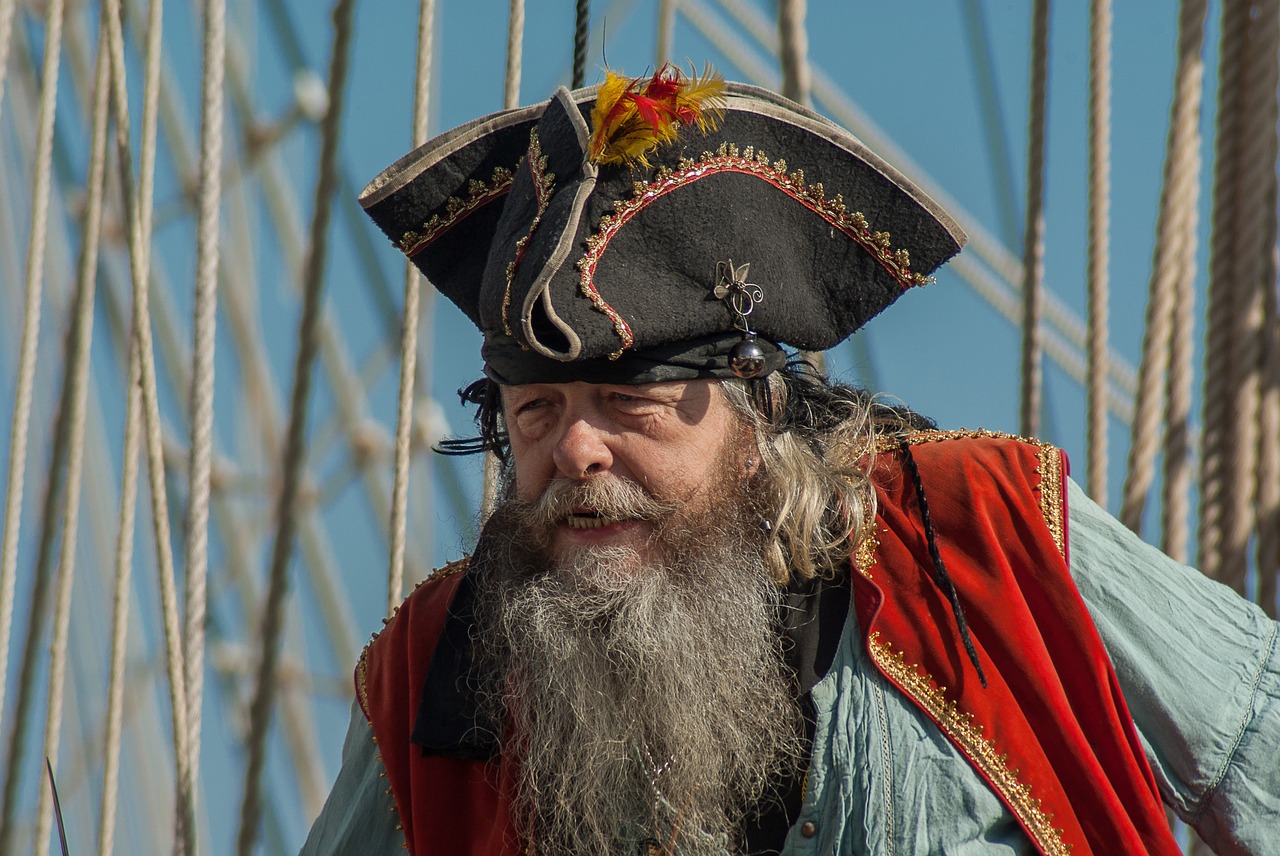
President Paul Watson | Sea Shepherd

Mr. Paul Watson, President of the Sea Shepherd militant group and a self proclaimed Admiral.

Paul Watson [born December 2, 1950] is a Canadian animal rights and environmental activist, who founded and is president of the Sea Shepherd Conservation.

Sea Shepherd is an organization that enjoys tax exempt status, but appears to be involved very closely with questionable business interests. Investigation by U.S. Internal Revenue Service

The Society and its leader have been involved in everything from intentionally sinking ships to booby trapping trees which loggers must try to harvest (the practice of which is suspected of seriously injuring at least one mill worker) and they’ve been involved in generally disrupting legal business enterprises.

Paul Watson Quotes 

News Clipping Paul Watson compares killing whales to Jews of ww2 “It was this kind of attitude by Jewish leaders in the Warsaw ghetto that resulted in the holocaust”

News Clipping Paul Watson said “Violent acts a justified if they save the whales”.

1993 Activist Handbook Paul Watson’s S.S. encourages actives to make up media data and quoted “The nature of the mass media today is such that truth is irrelevant”

2010 The Southland Times Paul Watson said “While the society had moral backing from much of the western world, it was on its own if anything happened”

2010 The Southland Times Paul Watson said “They’ve shot at us, fired concussion grenades and sunk one of our ships last year.” [note: the reference to grenades meaning fire crackers]

2010 The Southland Times Paul Watson said “We go, as we do every year, to bankrupt them, to sink them economically.”

2011 Media Probe – Paul Watson said “Right from the beginning our objective was to sink the Japanese whaling fleet economically to bankrupt them”

Note: Quotes are not taken out of context they are as said by the person in question.

His organisation has gotten a free ride in much of the western press, and many seem to think he’s a hero for harassing Japanese whalers. His motives are not necessarily so pure.

Watson has a history of dishonesty and outright criminal behavior.

Paul Watson Rap-sheet      Watch the Movie

1971. Green peace was foundered by Marie and Jim Bohlen (modest couple) joined up with Dorothy and Irving Stowe, Ben and Dorothy Metcalfe, and Robert Hunter they later meet Paul Watson at anti-nuclear protests that he was also participating in.

1977. Paul Watson expelled from green peace in 1977 voted 11 to 1 reason quoted by board member “a desire to push in self front and centre, shouldering everyone else aside.” [Note: Paul Watson has denied being a part of Greenpeace at later date]

1979. An S.S. ship rams the whaling ship “Sierra”.

1980. Paul Watson attached explosives to sierra same tactic used by French agents to since rainbow warrior 1985.

1980. The “Sierra” is sunk in Lisbon harbor. S.S. claims responsibility.

1981. The S.S. claims to have sunk two whaling vessels, “Ilsa I” and “Ilsa II”.

1986. S.S. activists ordered to leave Faroese waters during whale harvest. Ignoring the order, Faroese police try to board the S.S. S.S. crew fires a line rifle and throw signal flares at police zodiac.

Petrol was poured into the water around the zodiacs and flares were used in what was perceived by the police to be an attempt to set the petrol on fire.

1986. Paul Watson claims to sunken 10 ships, but after investigation in New York this was found to be 2.

1986. Paul Watson later recants his confession.

1986. The S.S. claims responsibility for the sinking of two Icelandic vessels and damage performed against an Icelandic whaling station.

1986. Paul Watson receives life time ban from IWC committee.

1988. Paul Watson demands to be taken into custody in Iceland for the sinking which took place in

1991. A U.S. fisherman reports his vessel being rammed by an S.S. vessel.

1992. The S.S. makes three failed attempts at ramming Costa Rica fishing vessels.

1993. Paul Watson, captaining the S.S. vessel “Edward Abby”, orders his crew to open fire on a Japanese fishing vessel. The crew refuses.

The encounter can be seen in the 1993 documentary “Ocean Rider – Defenders of the Wild”.

1993. The S.S. claims to have sunk 8 vessels and rammed and/or damaged 6 others.

1997. Paul Watson convicted in Norway and imprisoned in Netherlands for scuttling of a whaling vessel and ramming of a Norwegian coast guard vessel.

1997. Paul Watson was convicted in Norway and has an outstanding warrant in Costa Rica for the attempted murder of a fisherman.

2002. Arrest warrant issued in Costa Rica for Paul Watson for attempted murder and destruction or property resulting from an altercation with a Costa Rica fishing vessel.

2002. “We should never feel like we’re going too far in breaking the law” – Paul Watson, Animal Rights convention 2002

2008. The S.S. vessel “Farley Mowat” is confiscated and two members of the crew arrested.

2008. Sea Shepherd leader Paul Watson followed up the exchange by making a stunning claim to the media – “I felt an impact on my chest at one point,” he told the Australian Broadcasting Corp.

“I didn’t think too much of it at the time. When I opened up my Mustang survival suit, and I have a Kevlar bulletproof vest, there was a bullet lodged in.”

2009. Two S.S. crew convicted in Canada for their 2008 crimes. (Note: this conviction was passed down AFTER Paul’s comment to Larry King)

2010. Tokyo will seek Interpol’s help to arrest Canadian Paul Watson for ordering his crew to harass whaling ships in clashes in which Japanese crew were allegedly injured by rancid butter projectiles, broadcaster NHK reported.

2010. Paul Watson put on Interpol’s wanted list.

2010. Watson, speaking in New York, said “the arrest warrant is just totally political, it’s nothing. I’m not concerned, and Interpol is not going to extradite me on a politically motivated charge.”

2011. S.S Captains of Steve Irwin and Bob Barker vessels may soon well receive a Subpoena in the Netherlands for illegal campaigns in Antarctic neutral waters that include violating ‘Laws of the sea’.

[Gojira also by Australia]

Final Note on Militant Activists

The topic of Paul Watson and Sea Shepherds tactics are by no means acceptable. They are illegal, dangerous and totally ineffective at actually bringing about any meaningful change or reducing whaling or research.

I would suggest trying IWC and International/National Maritime for the purpose of lessening the seasons and/or permitted count for the purpose of research.

Militant captains or leaders are held accountable for all individual incidents outlined with evidence and are responsible for their crew members misdoings towards other vessels including crew members  that tend to go to Jail and have their vessels auctioned off for as little as $5,000 CAD.

This slideshow requires JavaScript.

BJ Hutton

== Articles ==

View the controversy in Photos & Articles

Icy Sea of Nations

Conservational Pirates Whaling War

Whaling War End is Near

Sea Shepherd’s Gojira Hopeless Crusade

Antarctica Capture & Retrieve

Check Mate ICR Research, Sea Shepherd Militant Group

Net Tightens on Militants S.S, Game Over

BJ Hutton
Antarctica | Icy Sea of Nations

Over View: The Antarctic’s highest point is 2800m at the south-pole. In 1933 The Australian Antarctic Territory (AAT) claims two parts of the Antarctic. The International Whaling Commission (IWC) took effect in 1946. 1959 The Antarctic Treaty System (ATS) was enforced in alignment with United Nations Convention on the Law of the Sea (UNCLOS). Conservation of Antarctic Seals formed in 1972. 1980 The Whale Protection Act was introduced. 1991 The introduction of the Madrid Protocol (MADRID) was introduced and the Australian Whale Sanctuary (AWS) was established in 1999.

Antarctica the largest ice mass in the world, site of 27-29 year round Research Stations of multiple Nations and Nationals.

The only indigenous population is located on Peter 1 Island this is located 90°W parallel to the South Pole.

Australia Antarctic Territory (AAT) come about on the 7th February via the British putting territory authority over the claim in Antarctic to our Commonwealth Government and was introduced in 1933 which predates that of the signing of the Antarctic Treaty System (ATS) by two decades. AAT does not apply to agreements related to Russian drilling currently.

To date the Australian Government with a sovereignty claim has not attempted to enforce national laws against Japanese vessels seen whaling in the AAT EEZ as on signing the ATS agreed to the suspension of claim of territory within the Antarctic EEZ in accordance to following the practice of all other United Nations in only exercising jurisdiction over its own nationals or those subject to Australian Law.

Australia’s claim in the Antarctic is 60° Parallel of the South Pole and between 45°E to 160°E, the second section of claim is 136°E to 142°E longitudes’. Australia still maintains the right to explore and exploit the seabeds and water columns within the EEZ; originally sovereign country’s EEZ was 3 nautical miles off shore.

Neither this claim nor any other is recognised by Russia, Japan, China or America that are only bound by UN UNCLOS. The only nations that do recognise this sovereign claim are Norway, New Zealand, Australia, France and UK.

Twenty-one of 28 Antarctic nations have made no claims for territory, with only seven making a total of 8 claims of sovereign territorials by 1961 below 60° S Parallel with zero having indigenous populations.

After World War 2, America, China and Japan renounced claim to Antarctic land/waters returning it to neutral waters and land.

The Exclusive Economic Zone (EEZ) is the zone that leading out from the mainland, in Antarctic the EEZ is a distance of 350kms or 200 nautical miles out.

1 April 2008 the decision was announced that Australia would now have EEZ rights to 2.5 million square kilometers of seafloor the tongue of shelf on the Kerguelen plateau that extends south of Heard Island inside the treaty boundary.

The United Nations Convention ‘Law of the Sea’ (UNCLOS) was introduced for greater maritime regulations of fishing and mammals in alignment to laws of UN, these laws outlining ‘Law of the Sea’ cover all aspects including legal status of the territorial sea, of the air space over the territorial sea and of its bed and subsoil and reservation of the high seas for peaceful purposes. This is comprises of 320 Articles and 9 Annexes.

All United Nations that signed the ATS are bound by the UNCLOS within Antarctic and international waters.

Antarctic Treaty System (ATS) 

Article 1 – Area to be used for peaceful purposes only; military activity, such as weapons testing, is prohibited, but military personnel and equipment may be used for scientific research or any other peaceful purpose;

Article 2 – Freedom of scientific investigation and cooperation shall continue;

Article 4 – The treaty does not recognize, dispute, nor establish territorial sovereignty claims; no new claims shall be asserted while the treaty is in force;

Article 7 – Treaty-state observers have free access, including aerial observation, to any area and may inspect all stations, installations, and equipment; advance notice of all activities and of the introduction of military personnel must be given;

Article 11 – Disputes to be settled peacefully by the parties concerned or, ultimately, by the International Court of Justice;

Reserved claims on territory within the Antarctica are currently held by America and Russia only but not an active option while there is an ATS. All drilling and mining in the Antarctic in relation to the above counties won’t be reviewed to 2048.

Australian Whale Sanctuary (AWS) established in 1999 to protect dolphins and whales from being killed, injured or hunted by fishing vessels unless permitted or authorised under the Environment Protection and Biodiversity Conservation Act 1999. This sanctuary is located adjacent to the Antarctica. Australian Naval and Custom vessels have the right within this area to arrest and board any vessel under the AAT.

The regulation of whaling was excluded from the ATS, that was added to the by contracting parties and Australian domestic law carefully recognises the general rule that Australian law will not be enforced against foreign countries operating under an authority granted by a party to the ATS.

Australia will not take action against the Japanese under this order because that would be an act of war, not under Australian law, but according to the law of most other countries in the world.

Any Government from any country such as Japan can permit contractors for whaling granted each year, that are not recognised by Madrid or the ATS, authorising the kill, take for scientific research purposes subject to the restrictions of the Contracting Government authorising the special permit, recognised by the IWC.

Japan could continue whaling anywhere in the Antarctic they like by withdrawing from the International Whaling Convention. They would not be bound by moratorium on commercial whaling, and therefore other nations ultimately would be powerless to lawfully stop Japan for whaling on the high seas. Currently Japan is happy to continue to permit whaling by its nationals and can only be interfered with in local domestic waters of nationals and/or within the AWS.

International Whaling Commission (IWC) 

IWC was introduced in 1946 setup under the International Convention for the purpose of the regulation of whaling on the high seas.

The conventions main task is to monitor the stocks of whaling for orderly development of the whaling industry. They are to review and revise as necessary the measures laid down by the convention which governs the conduct of all whaling throughout the world.

The IWC set the limits and size of the catch each year, they organise the placement of Whale Sanctuaries where required, agreed on by the member nations also they determine the length of time that the whaling season is open/closed each year.

They prohibit the capture of suckling calves and female whales that are accompanied by the calves. Each season members are required to submit reports on capture, statistical and biological records as required.

In addition, the commission encourages, co-ordinates and funds whale research, publishes the results of scientific studies on subjects such as the humaneness of the killing operations.

Any member of the UN can join the IWC that is represented by a commissioner assigned by the IWC, usually serving three years with that member.

Madrid Protocol 1991 (MADRID) 

The Madrid is an addition to the ATS adopted by all nations and parties which provides for comprehensive protection of Antarctica, as the last greatest wilderness on earth.

Introduced in 1991 the protocol consists of 6 Annex breakdowns covering the subjects:

Environmental Impact Assessment

Conservation of Antarctic Fauna and Flora

Waste Disposal and Waste Management

Prevention of Marine Pollution

Management of Protected Areas

Liability for Environmental Emergencies

As with the ATS any member that has signed the Madrid may however withdraw from the protocol if any amendments are made thereafter.

In Summary:

All nations that have signed the ATS requirements and therefore are abided to follow in accordance this treaty overrides any other treaty while enforced.

The Main objective of the ATS is to ensure in the interests of all mankind, that Antarctica shall continue forever to be used for peaceful purposes and shall not become the scene or object to international discord. The Treaty forbids military interaction of war machines but not personnel.

Antarctica is comprised of non-permanent nationals from sovereignty countries, Antarctic is not a sovereignty its self, all territory claims are suspended according to ATS while enforce but are still governed by that sovereignty.

Conservation Groups need to rethink their approach/strategies’ to dealing with and/or being heard via the process of diplomacy approach through government or IWC, not through attacks that can be seen as forms of piracy (approaching or boarding vessels, towing ropes in the attempt to cause destruction); interference (navigating in the path or seaway of another vessel); pollution (destruction of vessels and/or by using projectiles other than water) or defamation of a nation or company in the means of trying to bankrupt via hostile means.

The entire above are prohibited within the Antarctic according to ATS UNCLOS with sea safety to be observed at all times directed by Maritime Sea Authority (MSA). Domestic governments are required by law to maintain harmony within their own waters and the high seas, including Antarctic waters in relation to their own citizens and people that come under judicial territory to in upholding such laws.

In relation to vessels on the sea local or international the only authorised divisions that can inspect (notice must be given unless good reason given), board or interfere with another vessel are Customs and Navy.

Any other ship that takes onboard the duties of Customs or Navy vessels is in breach of the AAT in Australia and UN ATS UNCLOS. This by other members is seen as a threat and a means to invoke hostile intentions between nations, clearly illegal and may be seen as an Act of War if continues unchecked.

The Maritime Authority should impose domestic or international restrictions on conversation ships in relation to areas in which they can operate when it comes to environment protection, including dry-docking any vessels that a repeat offenders to breaching high sea laws.

BJ Hutton